Dog Training Tools Australia: What You Actually Need (And How to Pay Less)
Walk into any pet store and you’ll find entire aisles dedicated to dog training gear. Most of it is noise. A well-trained dog needs a handful of things done well — not a trolley full of gadgets. Here’s what actually works, with real prices from Australian retailers so you can spend wisely.
Quick Summary
- Training treats are your most important tool — small, soft, and high-value wins every time
- A crate is worth the investment for puppies and rescue dogs; multi-use models save money long-term
- Training pads are essential during puppy toilet training or apartment living
- You don’t need clickers, agility kits, or electronic collars to train a well-mannered dog
- Compare prices before you buy — the same products can vary by $10–$40 between Australian retailers
The Core Dog Training Toolkit
Professional trainers agree on the basics: positive reinforcement works, consistency matters, and the tools you use should support the training — not replace it. For most Australian dog owners, that means three categories of gear.
1. Training Treats: The Foundation of Reward-Based Training
If you only buy one thing, make it good training treats. They need to be small enough to give rapidly (you’re rewarding behaviour, not feeding a meal), soft enough to eat quickly without a chewing pause, and appealing enough that your dog actually wants them.
Treats made from single-protein Australian ingredients tend to land well with dogs and avoid the common allergens (wheat, corn, artificial flavours) that cause stomach upsets mid-session. SavourLife’s training treat range ticks these boxes — Australian lamb, chicken, and kangaroo options in resealable pouches sized for regular training use.
What to look for in training treats:
- Pieces smaller than your thumbnail (you’ll give dozens per session)
- Soft texture — crumbly or hard treats slow the reward loop
- Strong smell — dogs use scent heavily; smellier treats tend to be higher-value
- Single-protein if your dog has food sensitivities
Kangaroo and lamb are popular in Australia precisely because many dogs haven’t been exposed to them — making them genuinely novel and motivating. Beef and chicken work fine for most dogs but can lose impact if they’re already in your dog’s regular diet.
2. Training Crates: Investment That Pays Off Fast
A crate isn’t a cage — it’s a management tool that gives your dog a safe space and gives you a break from constant supervision during toilet training and the destructive puppy phase. Done right, most dogs choose to sleep in their crate long after training is done.
The key is getting the right size and a design that grows with your dog. Many cheap crates are single-use — sized for a puppy, outgrown in months. Convertible crates that transition from enclosed den to open pen save money over replacing gear as your dog grows.
Sizing guide: Your dog should be able to stand up, turn around, and lie flat. Too large and they’ll toilet in the far corner — defeating the purpose. If you’re buying for a puppy, size for their adult weight or buy a crate with a divider panel.
- Small breeds (under 10kg adult): Small crate
- Medium breeds (10–25kg): Medium or Large
- Large breeds (25kg+): Large or XL
Prices on crates vary considerably between Australian pet retailers. The Snooza range in particular tends to fluctuate — checking a comparison page before purchasing can save you $30–$50 on a single unit.
3. Training Pads: Useful Beyond Puppies
Training pads get a mixed reputation because people assume they’re only for puppies or lazy owners. In practice, they’re essential for apartment dogs without easy outdoor access, for senior dogs managing incontinence, and for quarantine periods when going outside isn’t an option.
The main quality differentiator is absorbency and leak-proof backing. Cheap pads saturate quickly, leak onto floors, and get walked through — creating more mess than they prevent. Thick quilted pads with a plastic backing and adhesive corner strips stay in place and contain the mess properly.
What You Don’t Need (Yet)
Pet marketing is good at selling complexity. Here’s what most dogs don’t need, especially early in training:
- Clickers: Useful for precision shaping, but your voice works fine for basic obedience
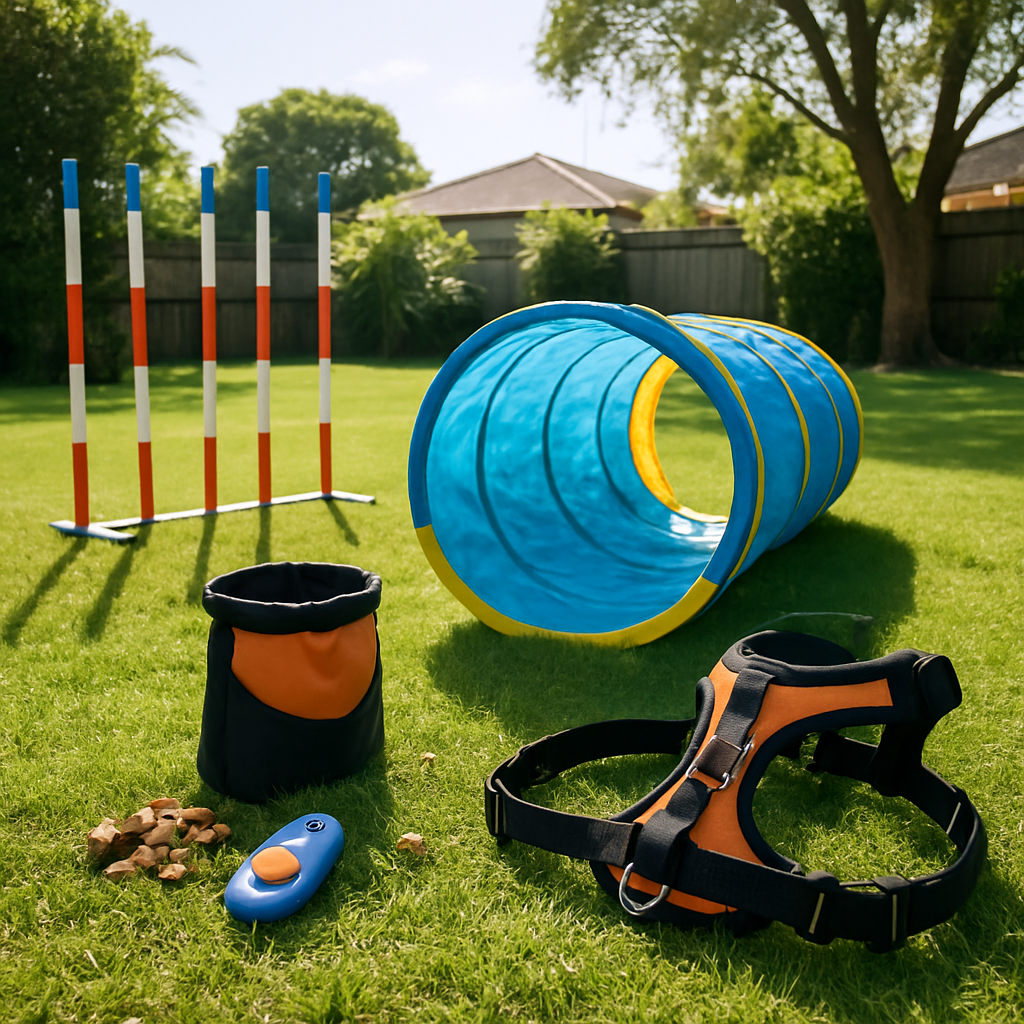
- Agility equipment: Great fun for advanced dogs, but useless if you haven’t nailed sit, stay, and recall first
- Electronic collars: Controversial, require professional guidance, and aversive training generally produces worse long-term outcomes than positive reinforcement
- Head halters: Have their place for specific leash-pulling problems, but aren’t a training tool on their own
Saving Money on Dog Training Gear in Australia
The Australian pet supply market has become genuinely competitive over the last few years. Prices on the same product can differ by 20–30% between retailers, and sales don’t always line up. A few habits that save money:
- Compare before every purchase — especially on bigger items like crates where the saving is meaningful
- Buy treats in bulk — larger pouches cost more upfront but the per-gram price is usually significantly lower
- Don’t overbuy gear — start with the basics, add tools as genuine needs emerge
- Check our price comparison pages before purchasing — we track prices across Australian retailers so you don’t have to
Training doesn’t require expensive gear. It requires consistency, patience, and treats your dog actually wants to work for. Get those three things right and the rest follows.